| MENU |
|
| MENU |
|
| 17Days | 2 Departures Available |
Our representative will meet you at the Delhi airport and transfer you to the hotel
Delhi, India’s capital has seen the great empires rise and fall around it for millennia, with each new batch of rulers building over the works of their predecessors. As a result, the city abounds in monuments and ruins of stunning diversity. The seat of the world’s largest democracy, it also boasts magnificent symbols of government that pay architectural tribute to the ideals of self-rule and democracy. These co-exist side by side with wide multi-lane motorways, shopping malls, fast cars, and ultramodern steel-glass office complexes that characterize any large 21st-century metropolis.
Overnight stay at the hotel
Post breakfast proceed for sightseeing -
Raj Ghat is the famous memorial to Mahatma Gandhi. The shrine bears testimony to the simplicity of the man who changed the world with the power of ideas. A simple black stone structure with an eternal flame burning at one end.
The majestic Red Fort was commissioned by the Mughal Emperor Shah Jahan in 1639 and remained the seat of the empire for the next two centuries. Today, the Prime Minister of the India delivers his Independence Day speech to the nation from the ramparts of this red sandstone structure.
Jama Masjid is one of Asia’s largest mosques. We shall view this magnificent structure from outside, its lofty and highly ornate domes and minarets reminiscent of a scene from the Arabian Nights.
Proceed for sightseeing to New Delhi.
New Delhi was built by the British in the 1930s as their imperial capital. Majestic government and administrative buildings line the wide, tree-lined avenues of what is also known as Lutyen’s Delhi after Sir Edwin Lutyens who was commissioned to design the city in 1911.
Start at India Gate, the red sandstone arch erected in memory of Indian and British soldiers who laid down their lives in World War I.
Close by are the majestic Parliament House, the seat of the world’s largest democracy and the Rastrapathi Bhawan, the Indian President’s official residence.
Inside are the famed Mughal Gardens with its ornate fountains and manicured lawns. Mughal Gardens are open to the public during spring.
Further south lies the Qutub Minar. Built by Qutubuddin Aibak, a slave general in 1193, it is India’s tallest stone tower and marks the site of the country’s first Muslim kingdom. The iron tower in a square opposite is unique in that it never rusts, although it has been exposed to the elements for centuries.
The lotus-shaped Bahai temple south of Delhi is also of interest. An ideal place for meditation, this Bahai House of worship is open to people of all faiths.
Overnight stay at the hotel
After enjoying your breakfast, make your way to the Shekhawati town of Mandawa.
After arriving, complete your check-in formalities at the hotel. Rest and relax for some time. After lunch, head out for sightseeing. Mandawa is a small town which is famous for its forts and havelis which are adorned with exquisite frescoes. These havelis were built by wealthy merchant families of the region.
Overnight stay at the hotel
Enjoy your breakfast in the morning and then leave for Bikaner. Complete your check-in formalities at the hotel and then head out for a sightseeing tour of Bikaner city.
You will visit the massive Junagarh Fort which is home to a number of marvelous palaces namely, Karan Mahal, Phool Mahal and Anup Mahal.
In the evening, explore the unique and fascinating camel breeding farm.
Overnight stay at the hotel
Post breakfast drive to Jaisalmer. Reach and check in at the hotel
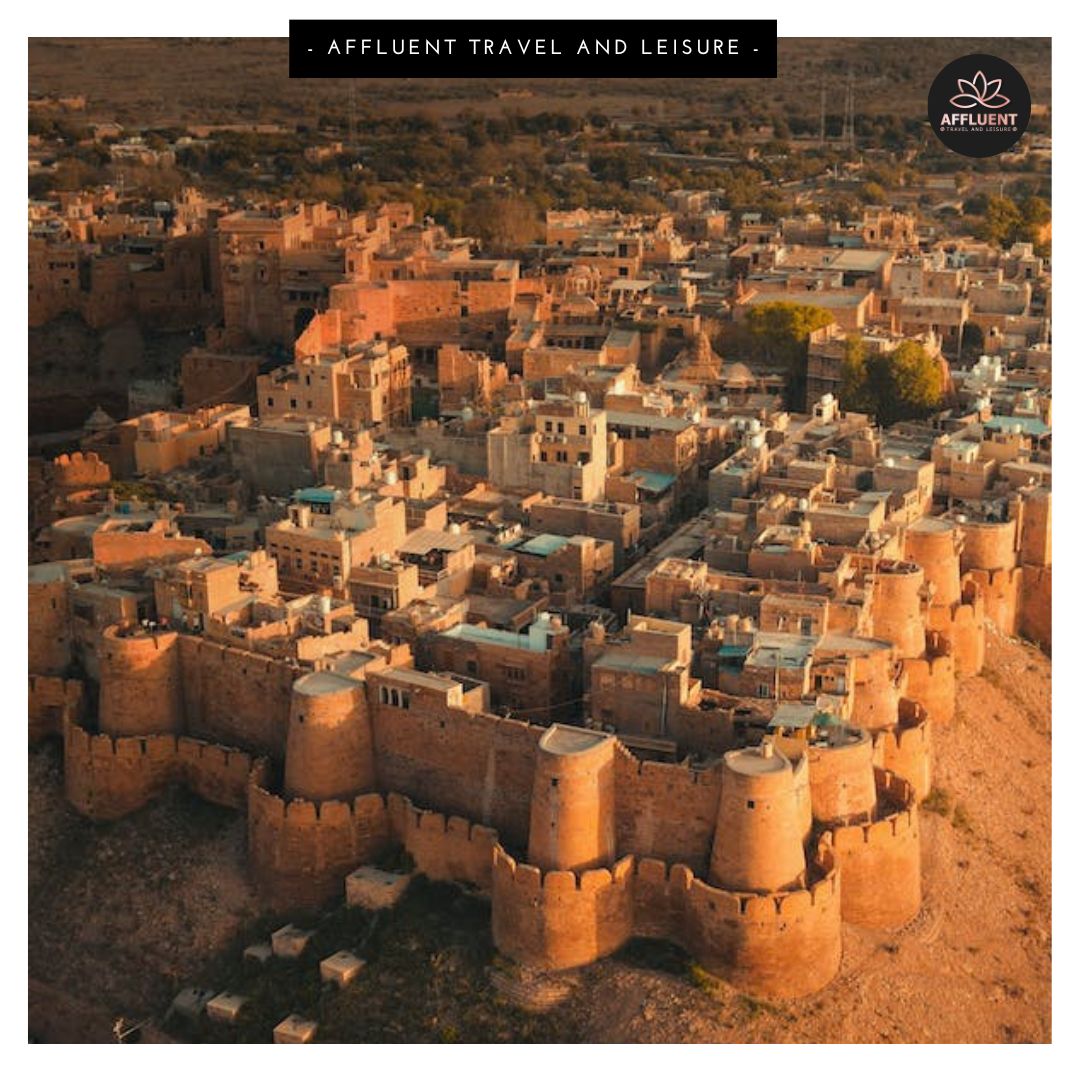
Rising from the heart of the Thar Desert like a golden mirage is the city of Jaisalmer. A commanding fort etched in yellow sandstone stands, with its awesome splendor, dominating the amber-hued city.
The city has an interesting legend associated with it, according to which, Lord Krishna – the head of the Yadav Clan, foretold Arjuna that a remote descendent of the Yadav Clan would build his kingdom atop the Trikuta Hill. His prophecy was fulfilled in 1156 AD when Rawal Jaisal, a descendent of the Yadav Clan and a Bhatti Rajput, abandoned his fort at Lodurva and founded a new capital – Jaisalmer, perched on the Trikuta Hill. His Yadav descent can be traced back to the Mahabharata and the Rajputs were famed for courage and gallantry.
Jaisalmer is studded with magnificent tourist haunts that encapsulates the vivacious culture of this lovely locale. It is laced with beautiful forts, sacred shrines, stately havelis reminiscent of the yester years, well stacked museums and a rippling lake.
Overnight stay at the hotel
After a relaxed breakfast proceed for full day sightseeing tour of The Golden City - Jaisalmer. It is in the heart of the Great Indian Desert. Its temple, fort and palaces are all built of yellow stone. The city is a mass of intricately carved buildings, facades and elaborate balconies.
Visit the JAISALMER FORT: The oldest living Fort in the world.
(This is the highlight of the tour)
The fort stands almost 30 meters over the city and houses an entire living area within huge ramparts. Walking through the narrow lanes is an experience worth savoring. It is approached through Ganesh Pol, Suraj Pol, Bhoot Pol and Hawa Pol. Also, within it are many beautiful havelies and a group of Jain temples dating from the 12th to the 15th centuries. The golden - yellow sandstone of Jaisalmer Fort, over 800 years old, crowns the Trikuta Hill. Within its walls, defended by 99 turrets, lies the old city, nearly a quarter of modern Jaisalmer. Seen from outside, the sight must be almost identical to what was seen by merchants on their overland camel caravans to central Asia. Once this desert outpost was an important gate for the trade route, and Jaisalmer grew wealthy on the proceeds. But the advent of commercial shipping relegated the town to relative obscurity. Known as SONAR QUILA, rising from the sand, the mega structure merges with the golden hues of the desert ambience and the setting suns in its most colourful shades gives it a fairy tale look. Its simply a magic, the bastions envelops a whole townships that consist of palace complex various security sources and the havelis of rich merchants carved with an incredibly light touch, several temples and the residential complexes of the armies and traders placed strategically on the trade route, from where the ancient caravans passed. Enjoy the sightseeing of the following places out of which the JAIN TEMPLES are inside the fort.
NATHMAL KI HAVELI: Two architect brothers built it in the 19th century. Interestingly, while one concentrated on the right, the other concentrated on the left and the result is a symphony epitomizing the side by side symmetry during construction. Paintings in miniature style monopolies the walls in the interior. Mighty tuskers carved out of yellow sandstone stand guard to the Haveli.
SALIM SINGH KI HAVELI: This Haveli was built about 300 years ago and a part of it is still occupied. Salim Singh was the prime minister when Jaisalmer was the capital of the princely state and his mansion has a beautifully arched roof with superb carved brackets in the form of Peacocks. The mansion is just below the hill and it is said that once it had two additional wooden story’s in an attempt to make it as high as the maharaja's palace, but the maharaja had the upper storey torn down.
PATWON JI KI HAVELI: This is one of the largest and most elaborate Haveli in Jaisalmer and stands in a narrow lane. It is five story’s high and is extensively carved. It is divided into six apartments, two owned by archaeological Survey of India, two by families who operate craft-shops and two private homes. There are remnants of paintings on some of the inside walls as well as some mirror work.
TAZIA TOWER: The delicate pagoda like Tazia Tower rises from Badal Mahal (Cloud Palace). Rising in its five-tiered splendor, with each storey graced by a delicately carved balcony, the tower is of historical significance. Muslim craftsmen built it in the shape of a Tazia and gifted it to their royal patron.
GODI SAGAR LAKE: This tank, south of the city walls, once held the town water supply, and befitting its importance in providing precious water to the inhabitants of this arid city, it is surrounded by small temples and shrines. The beautiful yellow sandstone gateway arching across the road down to the tank is the Tilon-ki-Pol, and is said to have been built by a famous prostitute, Tilon. When she offered to pay to have this gateway constructed, the Maharaja refused permission under it to go down to the tank and he felt that this would be beneath his dignity. While he was away, she built the gate, adding a Krishna temple on top so that king could not tear it down.
JAIN TEMPLES: These fine Jain temples were built in the 12th to 15th century, within the Jaisalmer Fort. They are beautifully carved and dedicated to Rikhabdevji and Sambhavnathji. The Gyan Bhandar, a library containing some extremely old manuscripts, is within the temple complex.
Overnight stay at the hotel
Post breakfast drive to Jodhpur.
Reach and check-in at the hotel
Set at the edge of the Thar Desert, the imperial city of Jodhpur echoes with tales of antiquity in the emptiness of the desert.Once the capital of the Marwar state, it was founded in 1459 AD by Rao Jodha - chief of the Rathore clan of Rajputs who claimed to be descendants of Rama - the epic hero of the Ramayana. The massive 15th century AD Mehrangarh Fort looms on the top of a rocky hill, soaring 125 Mts. above the plains. A long wall with 8 gates and innumerable bastions surrounds the whole city.
Proceed for sightseeing of Jodhpur.
Mehrangarh Fort - Situated on a steep hill, Mehrangarh fort is one of the largest forts in India. The beauty and the grandeur of numerous palaces in the fort narrate a saga of hard sandstones yielding to the chisels of skilled Jodhpuri sculptures. Mehrangarh Fort, spreading over 5 km on a perpendicular hill and looking down 125 meters, presents a majestic view on city horizon. It was built on advice of a saint in 1459 to establish an impregnable headquarters. This Fort is one of the best in India with its exquisitely latticed windows, carved panels, elaborately adorned windows and walls of Moti Mahal, Phool Mahal, and Sheesh Mahal. A collection of musical instruments, palanquins, royal costumes, furniture and the cannons on the fort's ramparts are well preserved.
Jaswant Thada - Close to the fort complex, lies Jaswant Thada. This 19th century royal cenotaph built in white marble in commemoration of Maharaja Jaswant Singh II and three other cenotaphs stand nearby. The cenotaph of Maharaja Jaswant Singh holds the rare portraits of the rulers and Maharajas of Jodhpur. A visit inside the cenotaphs, with some villagers of the region, would bring forward the reverence they still hold for their brave kings.
Walk through the old town experiencing the colourful culture of Rajasthan.
You could drive to the BAL SAMAND PALACE for a late lunch by the lake.
This evening visit Umaid Bhawan Palace museum.
Umaid Bhawan Palace: The Umaid Bhawan Palace was actually built with the purpose of giving employment to the people of Jodhpur during a long drawn famine. The royal family of Jodhpur still lives in a part of the palace. Another part of the palace houses a well-maintained museum, displaying an amazing array of items belonging to the Maharaja and the royal family - weapons, antiques & fascinating clocks, crockery and trophies.
Overnight stay at the hotel
Post breakfast proceed to Udaipur en route stop at Ranakpur for lunch and Jain temple visit.
Ranakpur Temples are acclaimed worldwide for their intricate and superb architectural style. These temples form one of the five major pilgrimages of the Jains. Built in the 15th century, Ranakpur temples are known for being the largest and most important temples of the Jain cult. SETH DHARNA SHAH (a Jain businessman) built the temple with the aid of Rana Kumbha, who ruled Mewar in the 15th century. Ranakpur got its name after the name of the Rajput Monarch and likewise the temples. The temple complex is positioned in an isolated valley on the western side of the Aravalli Range. The Jain Temples of Ranakpur are certainly creditable for their splendid architecture. This temple is wholly constructed in light colored marble and comprises a basement covering an area of 48000 square feet. There are more than 1350 exquisitely carved pillars that support the temple.
Reach Udaipur and check - in at hotel. Relax at the hotel
The city of Dawn, Udaipur is a lovely land around the azure lake, hemmed in by the lush hills of the ARAVALLIS. A vision in white drenched in romance and beauty, Udaipur is a fascinating blend of sights, sound and experiences and inspiration for the imagination of poets, painters and writers.Its kaleidoscope of fairy-tale palaces, lakes, temples, gardens and narrow lanes strewn with stalls, carry the flavor of a heroic past, epitomizing valor and chivalry. Their reflection in the placid waters of the LAKE PICHOLA is an enticing sight.
Udaipur is the jewel of MEWAR - a kingdom ruled by the Sisodia dynasty for 1200 Years.
Overnight stay at the hotel
Proceed for sightseeing tour of Udaipur, stopping first at City Palace.
City Palace - Standing on the east bank of Lake Pichola, is a massive series of palaces built at different times from 1559 A.D. The balconies of the palace provide panoramic views of "Jag Niwas" (the world wide famous Lake palace hotel), Jag Mandir on one side and on the other the city of Udaipur.
Its main entrance is through the triple-arched gate - the Tripolia, built in 1725. The way now leads to a series of courtyards, overlapping parations, terraces, corridors and gardens - a harmonic profusion hard to describe. There is a Suraj Gokhda, where the maharanas of Mewar presented themselves in the times of trouble to the people to restore confidence. The Mor-chowk (Peacock courtyard), gets its name from the vivid mosaics in glass decorating its walls. The chini chitrashala is noteworthy while a series of wall paintings of KRISHNA are on display in Bhim Vilas. There are numerous other palaces such as Dilkhush Mahal, Sheesh Mahal, Moti Mahal and Krishna villas - in memory of a princess of striking beauty who poisoned herself to avert a bloody battle for her hand by rival princess. Now the palace contains many antique articles, paintings, decorative furniture and utensils and attracts thousands of visitors every day.
Here you will marvel at rooms with mirrored walls and ivory doors, coloured glass windows and inlaid marble balconies and the Peacock Courtyard.
Saheliyon Ki Bari - Maharana Sangram Singh builds this in the mid 18th century. The 'garden of the maidens' brings to mind the lifestyle of the ladies of the court. The delightful gardens appear discreet and in impeccable taste. There are four pools with dainty kiosks, and all around are flowerbeds, lawns, pools and fountains protected by a series of walls and shady trees. The Foundation of the Sahelion Ki Bari functions solely by water pressure and no pumps are used. The garden has a lotus pool, a sitting room decorated with paintings and glass mosaics. The whole ambiences are flavoured by the nostalgia of those beautiful bells, enjoying themselves in a lavish aura.
Jagdish Temple - The temple is situated in the middle of the city. The temple of Jagannath Rai, now called Jagdish-ji, is a major monument and should be seen carefully. Raised on a tall terrace and completed in 1651, it is a tribute alike to the tenacity of its builders and the resilience of the art tradition it represents. It attaches a double storied Mandapa (hall) to a double - storied, saandhara (that having a covered ambulatory) sanctum. The mandapa has another storey tucked within its pyramidal samavarna (bell - roof) while the hollow clustered spire over the sanctum contains two more, non - functional stories. Lanes taking off from many of the sheharpanah (city wall) converge on the Jagdish Temple and walking leisurely through them brings you face with the many layers of the cultural palimpsest that Udaipur is. It was built by Maharana Jagat Singh Ist in 1651 A.D.
Proceed for Evening Motor launch cruise on the placid waters of Lake Pichola. From the boat you will be able to view the city of Udaipur as it rises majestically above the lake in the middle of the Rajasthan desert.
Also visit the Jag Mandir Palace - the other island palace in the middle of the lake. Spend some time at the Jag Mandir Palace.
Overnight stay at the hotel
After breakfast drive to Pushkar.
Reach and check in at the hotel. Proceed the sightseeing of Pushkar
We will visit the famous Pushkar Lake that is believed to be the one and only worship place of Lord Brahma in the whole universe. We will also visit the Lord Brahma temple and Cattle fair ground where the world-famous Pushkar Cattle Fair held every year.
Overnight stay at the hotel
Post breakfast drive to Jaipur. Reach and check in at hotel
Jaipur, also known as the ‘Pink City’ from the facelift it received in 1853 to celebrate a visit by Prince Albert, is dotted with havelis (traditional mansions), bazaars, opulent palaces and rugged majestic forts that showcase the glorious past of its rulers, the Rajputs.
The Rajput princes were fierce warriors, some of whom declared loyalty to the invading Mughals and proved to be formidable allies of the empire. Among them was King Jai Singh II, whom the Mughals gave the title Sawai Maharaja, or “King and a quarter”. Jaipur gets its name from this valiant king.
Overnight stay at the hotel
Breakfast will be at hotel. Proceed for a morning excursion will be taken to the Amber Fort. Enjoy the fort ascent on elephant back in a royal manner.
AMBER FORT PALACE - Amber is the classic romantic Rajasthani fort palace. Its construction was started by Man Singh I in 1592, and completed by his descendent Jai Singh I. Its forbidding exterior belies an inner paradise where a beautiful fusion of Mughal and Hindu styles finds its ultimate expression.
Afternoon sightseeing tour of Jaipur visiting.
CITY PALACE - A delightful blend of Mughal and traditional Rajasthani architecture, the City Palace sprawls over one-seventh of the area in the walled city.
It houses the Chandra Mahal, Shri Govind Dev Temple and the City Palace Museum.
JANTAR MANTAR - This is the largest and the best preserved of the five observatories built by Jai Singh II in different parts of the country. This observatory consisting of outsized astronomical instruments is still in use.
HAWA MAHAL - The ornamental facade of this "Palace of Winds" is a prominent landmark in Jaipur. It is a five-storey structure of sandstone plastered pink encrusted with fine trelliswork and elaborate balconies. The palace has 953 niches and windows. Built in 1799 by Pratap Singh, the Mahal was a royal grandstand for the palace women.
Free in the evening for some exciting shopping.
Overnight stay at the hotel
Post breakfast drive to Ranthambore. Reach and check in at the hotel
Ranthambore Tiger Reserve, at the junction of the Aravalis and the Vindhyas, is a unique example of natural and historical richness, standing out conspicuously in the vast, arid and denuded tract of eastern Rajasthan, famous for the tigers. It spreads over a highly undulating topography varying from gentle to steep slopes; from flat-topped hills of the Vindhyas to the conical hillocks and sharp ridges of the Aravalis, from wide and flat valleys to narrow rocky gorges. An important geological feature the ‘Great Boundary Fault’ where the Vindhya plateaus meet the Aravali Hill range meanders through the Reserve. The rivers Chambal in the south and Banas in the north bind the National Park.
Tiger, at the apex of the food chain, lord over the kingdom in a subtle way. Solitary by nature, it operates in stealth. Therefore tiger sightings, frequent as they are, are always a matter of chance. However, even evidences of tiger's activities are very exciting.
Overnight stay at the hotel
01 Morning Jungle and 01 Afternoon Jungle Safari ( sharing Jeep )
Relax at resort
Overnight stay at the hotel
Post breakfast drive to Agra and en route visit Fatehpur Sikri
Fatehpur Sikri is 37 km west of Agra. Jajal-ud-din-Muhammad Akbar, Humanyun's son, accessed the throne at the tender age of 14. While hunting around Sikri his curiosity was aroused by the songs of some minstrels about the celebrated Khwaja -Mu'inu'd-din Chisti, the founder of the Chisti order of SUFIS. Akbar, who was without a male heir heard about Saint Salim Chisti and visited him in the year1568,. The saint blessed him with 3 sons and in gratitude Akbar ordered the great mosque of Fatehpur Sikri built under his supervision. As a mark of respect to the saint, Akbar shifted his capital to Fatehpur Sikri and built various secular buildings like the Diwan -I-Am, Diwan-I-Khas, Jodhabai palace, Birbal's house, Marian's house and the Panchmahal.
Continue drive to Agra. Reach and transfer to hotel.
AGRA: Two great Mughal monarchs, Akbar and Shahjehan, transformed the little village of Agra into a befitting second capital of the Mughal Empire - giving it the name Dar-ul-Khilafat {seat of the Emperor}. Today a visitor to Agra is caught up in a world of contrasting edifices, of red sandstone and white marble, narrow galleys and quaint buggies, and that irresistible charm that this favorite city of the Mughals still retains. It is not surprising, that modern Agra still reflects its Mughal heritage most conspicuously. A walk down the narrow bustling streets of the city will introduce the visitor to the wafting aroma of Mughlai cuisine.
Mehtab Bagh is a charbagh complex in Agra, North India. It lies north of the Taj Mahal complex and the Agra Fort on the opposite side of the Yamuna River, in the flood plains. The garden complex, square in shape, measures about 300 by 300 metres and is perfectly aligned with the Taj Mahal on the opposite bank
Overnight stay at the hotel
Proceed for a SUNRISE visit of the monument of love – TAJ MAHAL.
TAJ MAHAL (REMAIN CLOSED ON EVERY FRIDAY) Little needs to be said about this architectural wonder, which is always the soul raison-de-etre for every tourist’s visit to Agra. Built by Shah Jahan, the Taj is a white marble memorial to his beautiful wife Mumtaz Mahal. This monument took 22 years to be completed and was designed, and planned by Persian architect Ustad Isa. Apart from its stunning design balance and perfect symmetry, the Taj is also noted particularly for its elegant domes, intricately carved screens and some of the best inlay work ever seen.Return to the hotel for a leisurely breakfast.
Proceed for day sightseeing of Agra.
AGRA FORT – The red sandstone structure is surrounded by chahar-bagh, a foursquare formal garden. Built by the famed Mughal emperor Akbar in 1565 AD, the fort is predominantly of red sandstone. Ensconced within is the picture perfect Pearl Mosque, which is a major tourist attraction. It lies on the bend of the river Yamuna, almost in the heart of the town. Akbar built it as his citadel over the years 1563-73 in the finest architectural style. It has imposing gates and walls of red sandstone and a moat.
After Agra Fort we will visit BABY TAJ or the ITMAD-UD-ULLAH – The interiors of which are considered better than the Taj. It is one of the most beautiful Mughal tombs and was built by Nur Jahan, the Empress of Jahangir for her father in 1628. The tomb is a resting place of the powerful personality in Mughal Court, Itmad-Ud-Daulah, whose life is very interesting. Formerly a very poor Persian merchant then named Mirza Ghiyas or Ghiyas Beg, he became a minister and a trusted treasure in Akbar’s court. After Akbar’s death in 1605, his son Jahangir rose into power. Jahangir made Ghiyas Beg his chief minister and honored him with the title of Itmad-Ud-Daulah, the Pillar of State. Later, Jahangir met a beautiful daughter of Ghiyas Beg named Mehr-Un-Nissa and married her. Mehr-Un-Nissa soon played a significant role in the Jahangir’s court and was called Nur Mahal, the light of the Palace. Owing to her influence, her father and brother were granted with privileges in the court. When Ghiyas beg (Itmad-Un-Daulah) dies in 1622, Nur Mahal decided to build a mausoleum for him. Queen Mumtaz Mahal or the lady of the Taj was also from this prevailing family. The mausoleum is entirely made of white marble and graced with intricate decoration of inlay work, and marble-screen work belonging to the Islamic style. With its tranquil, small garden on the bank of Yamuna River, the tomb stands impressively elegant from a distance.
Later drive to Delhi. Reach and check in at the hotel
Rest of the time will spend at leisure
Overnight stay at the hotel
Transfer to Delhi airport and board the flight to home country.
“TOUR ENDS WITH MEMORIES”


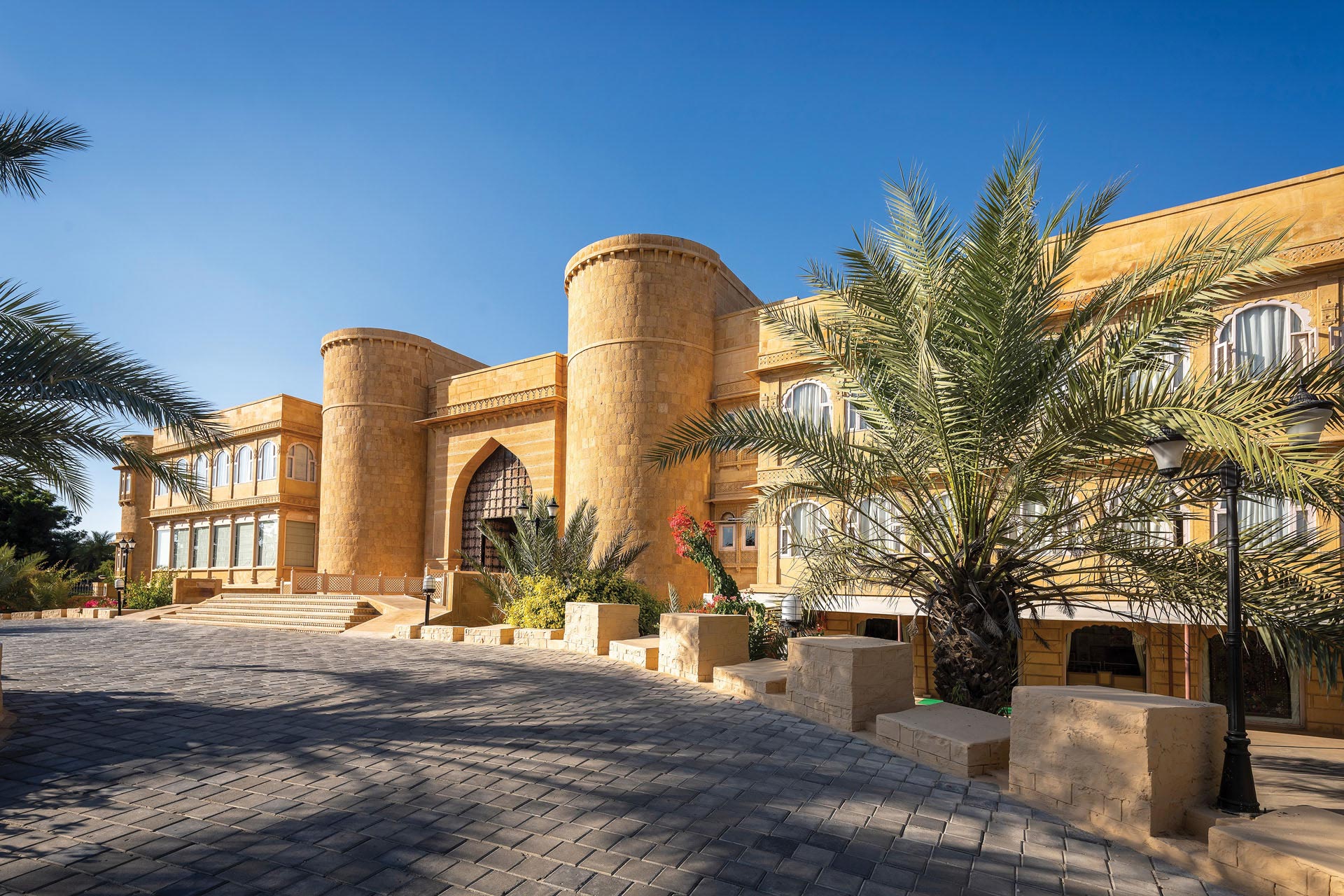


| Date | No. of Nights | Offer Ends | Two Sharing Price | Solo Traveller Price | Book |
| 26-10-2026 | 16 Nights | 27-08-2026 | USD2000 | USD3000 | |
| 14-11-2026 | 16 Nights | 05-10-2026 | USD2100 | USD3100 |
TOUR EXPERIENCE INCLUDES:-
EXCLUSIONS (TOUR PACKAGE DOES NOT INCLUDE):-
B-1/ 603A, II Floor, Front Side, Near Janakpuri East Metro Station, Janakpuri, New Delhi – 110058, India
Registered Address:61, Shiva Enclave, Block F, Vikas Nagar, Uttam Nagar, New Delhi-110059, India
Stay updated with the latest travel trends & our special offers, delivered straight to your inbox.